
Artificial intelligence is changing how we work.
Today, AI tools can write articles, answer questions, create images, analyze data, and even write code. Because of this, many people worry that AI will replace jobs and render some skills useless.
But something interesting is happening.
While AI is making certain tasks easier, it is also making some human skills more valuable than ever before.
People who develop these skills may have better career opportunities, stronger businesses, and a better chance of succeeding in the future.
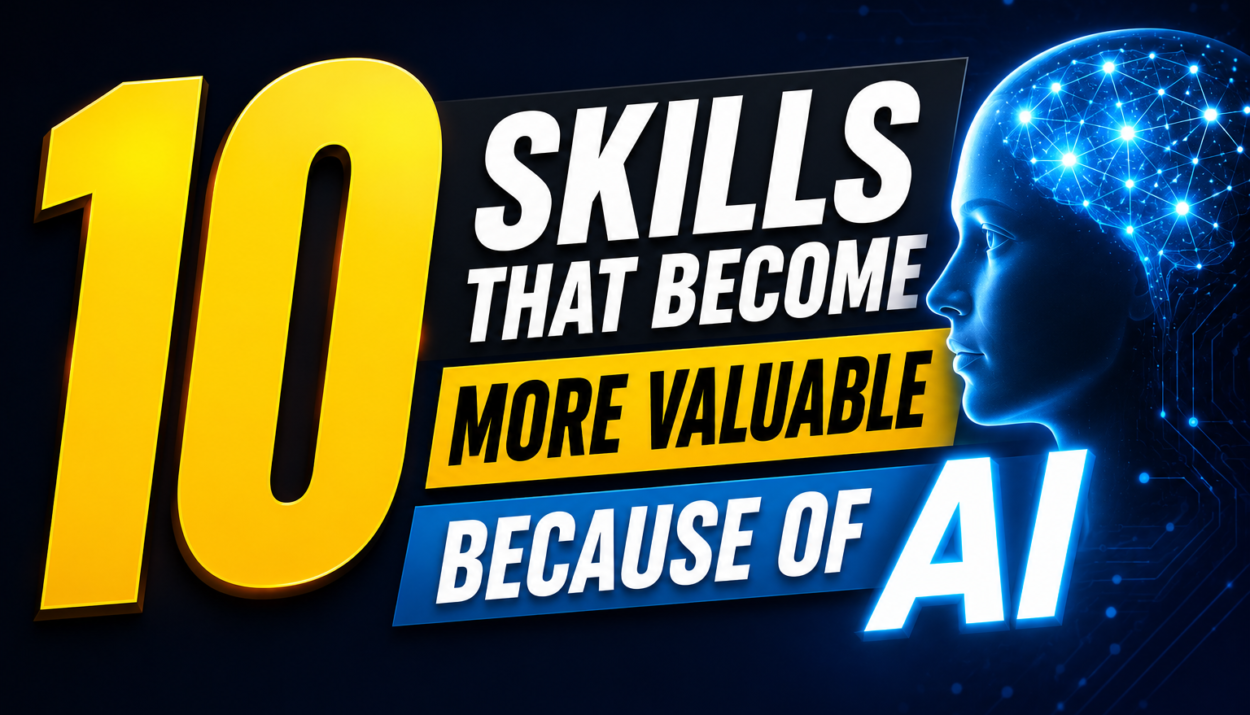
Let’s look at 10 skills that are becoming more valuable because of AI.
1. Critical Thinking
AI can provide answers very quickly.
However, it does not always know if those answers are correct.
This is where critical thinking becomes important.
Critical thinking means:
- Asking questions
- Checking facts
- Looking at different opinions
- Making smart decisions
For example, AI may recommend a business strategy. A person still needs to decide whether that strategy fits their business.
People who can think carefully and make good decisions will remain valuable.
How to improve this skill:
- Read different sources.
- Ask “Why?”
- Verify information before believing it.
- Learn how to analyze problems.
2. Creativity
AI can create text, images, and videos.
But creativity starts with human imagination.
Businesses need people who can:
- Generate new ideas
- Create unique products
- Tell stories
- Solve problems differently
Two people can use the same AI tool and get very different results.
The more creative person usually creates better content.
Example:
A designer can use AI to create logos, but creativity helps them produce designs that match a client’s needs.
3. Communication Skills
Good communication is becoming even more important.
AI can write emails, but it cannot build relationships like humans can.
Communication includes:
- Listening
- Explaining ideas clearly
- Understanding emotions
- Building trust
Employers and businesses value people who communicate well.
Real-life example:
Customer support bots can answer basic questions, but difficult situations often require a real person.
4. Emotional Intelligence
Emotional intelligence means understanding people’s feelings.
This includes:
- Empathy
- Patience
- Understanding emotions
- Managing relationships
AI can analyze words, but it cannot truly understand human emotions.
Managers, leaders, teachers, and business owners rely heavily on emotional intelligence.
5. Problem-Solving
Companies pay people to solve problems.
AI may suggest solutions, but humans decide which solution works best.
Problem-solving involves:
- Understanding the issue
- Looking at different options
- Testing solutions
- Making decisions
Example:
If a website crashes, AI can suggest several possible fixes, but an experienced person can identify the actual cause.
6. Adaptability
Technology changes very quickly.
New AI tools appear every month.
People who can learn and adapt often succeed.
Adaptability means:
- Learning new tools
- Accepting change
- Trying new methods
- Improving your skills
Many jobs today did not exist ten years ago.
The same will happen in the future.
7. Leadership
AI can provide information, but it cannot replace strong leaders.
Good leaders:
- Inspire people
- Build teams
- Solve conflicts
- Make decisions
Businesses still need human leaders.
Even small business owners need leadership skills.
8. Decision-Making
AI provides information.
Humans make the final decision.
For example:
- Should you hire someone?
- Should you launch a new product?
- Should you invest money?
Good decisions often require experience and judgment.
People who make smart decisions become extremely valuable.
9. Learning New Skills Quickly
The ability to learn quickly may become one of the most important skills in the future.
Technology changes constantly.
People who continue learning stay competitive.
Ways to improve:
- Read books.
- Watch tutorials.
- Practice new tools.
- Take online courses.
Learning itself is becoming a valuable skill.
10. Asking Better Questions
AI performs better when users ask better questions.
For example:
Poor prompt:
Write a blog post.
Better prompt:
Write a beginner-friendly article with examples, simple language, and practical advice.
The quality of AI often depends on the quality of the questions.
This skill is becoming increasingly important.
Why These Skills Matter
AI is excellent at:
- Repetitive tasks
- Data analysis
- Content generation
- Automation
Humans remain better at:
- Creativity
- Emotions
- Leadership
- Judgment
- Relationships
The future may belong to people who combine AI tools with strong human skills.
How to Start Improving Today
You do not need expensive courses.
You can start by:
- Reading daily.
- Practicing communication.
- Solving problems.
- Learning new tools.
- Asking questions.
- Building relationships.
Small improvements over time create big results.
Even spending 30 minutes a day learning something new can make a difference.
Final Thoughts
Artificial intelligence will continue to grow.
Some jobs will change.
Some tasks will become automated.
But many human skills are becoming more valuable, not less.
Critical thinking, creativity, emotional intelligence, communication, and leadership are skills that machines cannot easily replace.
Instead of asking:
Will AI replace me?
Ask:
Which skills should I develop to work better with AI?
The people who learn, adapt, and improve these skills may find more opportunities in the years ahead.
AI is not only changing technology.
It is changing which human skills matter most.